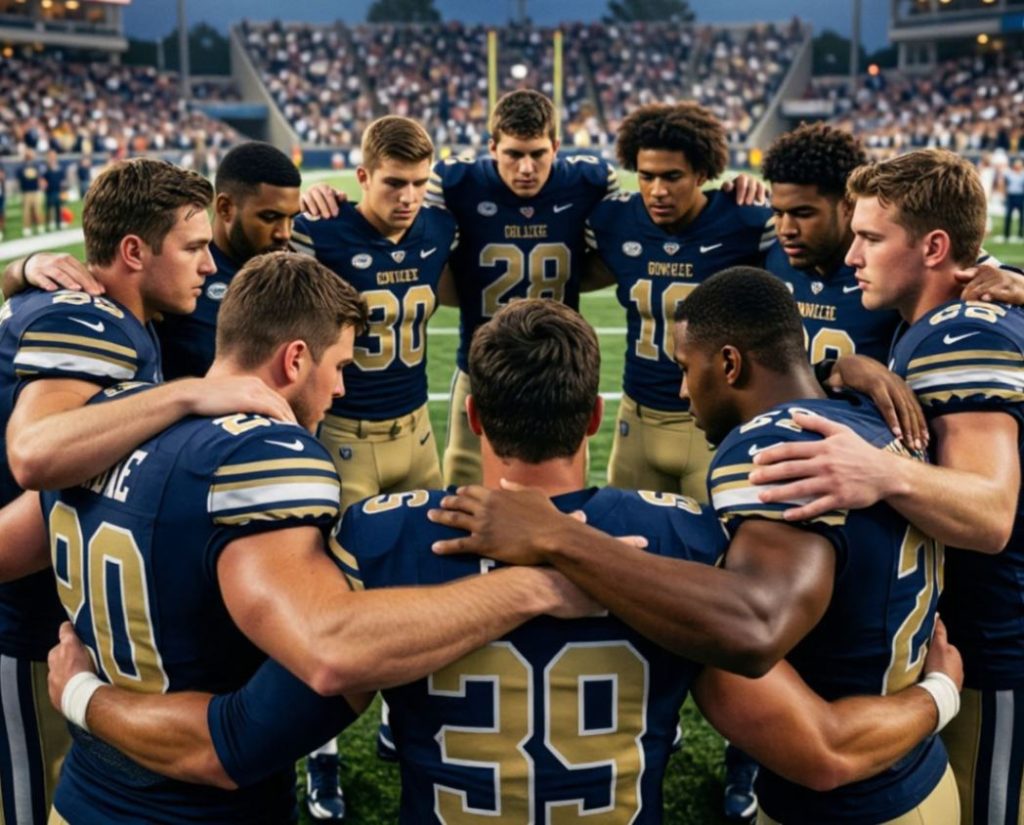
The massive talent gap between elite college football programs and their lesser-known counterparts often dominates public discussion. Mainstream sports media spend years building up the aura of “blue-blood” programs, creating a powerful perception that powerhouse teams are invincible when facing lower-tier opponents. This narrative of ultimate supremacy heavily influences the betting public, who routinely overvalue recruiting rankings, brand recognition, and conference prestige. However, when highly touted favorites take the field against disciplined, motivated underdogs, the actual competitive gap is frequently much narrower than the point spread suggests.
The psychology of the “blue blood” bias
Bookmakers do not set lines based solely on pure athletic talent; they adjust odds to manage public betting liability. Because casual bettors overwhelmingly back famous, nationally televised brands, oddsmakers are forced to artificially inflate the spreads on popular favorites. This means a top-ten team playing a lower-profile conference opponent might be favored by three touchdowns, even if their current defensive line is struggling or their quarterback is playing through a minor injury. This structural inflation creates a massive, repetitive edge for analytical minds who look past recruiting stars to evaluate actual on-field execution.
Tactical styles that neutralize recruiting advantages
While an elite program might possess a roster filled with former four-star and five-star high school prospects, raw athleticism can be systematically neutralized by specific coaching schemes. When a highly talented favorite is forced to play a style of game that limits their offensive possessions, their margin for error shrinks dramatically. Underdogs that operate with a clear structural identity often create unique tactical headaches that elite talent alone cannot solve.
To identify underdogs capable of frustrating superior opponents, analysts must look beyond basic team statistics and isolate specific schematic traits:
- triple-option or ultra-slow rushing offenses: teams that run the ball relentlessly bleed the clock, reducing the overall number of possessions in a game and keeping the score close.
- highly disciplined, low-penalty defensive units: underdogs that refuse to beat themselves with foolish penalties or critical turnovers force favorites to earn every single yard.
- veteran offensive lines: a mature, experienced front five can hold their ground against younger, more athletic defensive linemen, neutralizing a favorite’s primary physical advantage.
- creative defensive schemes utilizing heavy zone coverage: forcing a highly recruited but inexperienced quarterback to make multiple complex reads down the field often leads to game-changing mistakes.
These schematic profiles demonstrate that football is a game of matchups rather than a simple tally of recruiting stars. When a heavy favorite faces an opponent designed to strangle the tempo of the game, the favorite’s athletic superiority is heavily marginalized. This friction makes covering large point spreads incredibly difficult, regardless of the historical prestige of the powerhouse school.
Quantifying the value of non-power conference underdogs
The disparity in resources between the wealthiest conferences and the rest of college football creates a persistent market bias. Bookmakers frequently assume that a mid-tier team from a power conference will easily dismantle a top-tier team from a group-of-five conference simply due to the prestige of their respective leagues. Historically, this assumption has proven to be highly flawed, particularly during early-season non-conference matchups where the lower-tier program treats the game as their personal championship.
To understand how these class dynamics play out in the actual betting market, we can examine historical cover rates for underdogs across different matchup scenarios.
| Matchup scenario | Average point spread | Underdog straight-up win rate (%) | Underdog against-the-spread (ATS) cover rate | Primary driver of the market bias |
|---|---|---|---|---|
| Group of five at power four | +17.5 to +24.0 | 14.2% | 55.4% | Public overvalues recruiting rankings and ignores local motivation |
| In-state rivalry matchups | +14.5 to +21.0 | 18.6% | 57.1% | Extreme familiarity and local pride neutralize raw talent advantages |
| Power-four team off a major win | +10.5 to +16.0 | 22.4% | 54.8% | Emotional letdown spots are completely unpriced by oddsmakers |
| Neutral-site postseason bowl games | +7.5 to +13.0 | 31.2% | 53.9% | Motivation disparities heavily favor the highly excited underdog |
The analytical data highlights a clear trend of market inefficiency when dealing with large point spreads in specific situational spots. Underdogs cover at a significantly higher rate in in-state rivalries because the emotional intensity and local familiarity minimize the impact of roster depth. Similarly, when a power-four powerhouse travels to a smaller venue after a massive, emotionally exhausting victory against a top rival, they are highly susceptible to a slow start, making the underdog a highly lucrative betting target.
Systematic steps to locate overvalued favorites
Successfully executing an underdog-centric betting strategy requires a structured, emotionless evaluation process. Rather than hoping for a chaotic upset, analysts must identify specific structural vulnerabilities in the favorite’s current roster. This systematic approach ensures that every wager is placed on a team with the physical and tactical tools to keep the score well within the inflated point spread.
To build a reliable model for identifying overvalued favorites, bettors should implement several key analytical steps:
- measure the favorite’s offensive line yards metric: if a highly ranked favorite struggles to generate push upfront, they cannot consistently run the ball to run out the clock late in games.
- analyze the underdog’s defensive success rate: teams that consistently keep opponents behind the chains on first and second down can force predictable third-down situations.
- evaluate the historical performance of the underdog coach: certain developmental coaching staffs excel at preparing their rosters for games against elite opponents.
- check the weather and wind forecasts: cold temperatures, heavy rain, or high winds naturally reduce scoring efficiency, heavily favoring the team getting points.
Applying this structured screening process allows you to separate paper-thin favorites from genuinely dominant teams. By focusing on metrics like line yards and defensive success rates rather than media rankings, you can quickly locate matchups where the underdog is poised to put up a far tougher fight than the public expects. This systematic discipline is the foundation of long-term profitability in the volatile world of college football.
Capitalizing on the human element
Ultimately, college football is played by young athletes whose performances are heavily shaped by psychology, motivation, and preparation. While a professional franchise operates with business-like consistency, college rosters are prone to massive emotional swings that statistical models often struggle to quantify. When a bookmaker sets a line based entirely on the assumption of a class difference, they ignore the reality that discipline, motivation, and scheme can bridge almost any talent gap. Finding success in this market means embracing these human elements, knowing that on any given autumn Saturday, execution will always triumph over reputation.